The Aine Frame Breaking News
Opinion | Anthropic's IPO Will Be a National-Security Win for Taiwan: WSJ
Opinion | Anthropic's IPO Will Be a National-Security Win for Taiwan: WSJ

9 min read
Original founder essays, technical field audits, and strategic commentary on applied intelligence and autonomous business architecture by Justin Davis.

Opinion | Anthropic's IPO Will Be a National-Security Win for Taiwan: WSJ
Google AI Overviews and modern search engines are rewarding direct, verifiable answers over bloated content. Here is how modern businesses adapt.
A comprehensive empirical investigation of Google's December 2021 local search rebalancing, analyzing multi-point coordinate grid telemetry, ranking radius contraction, and the mathematical attenuation of title keyword signals.
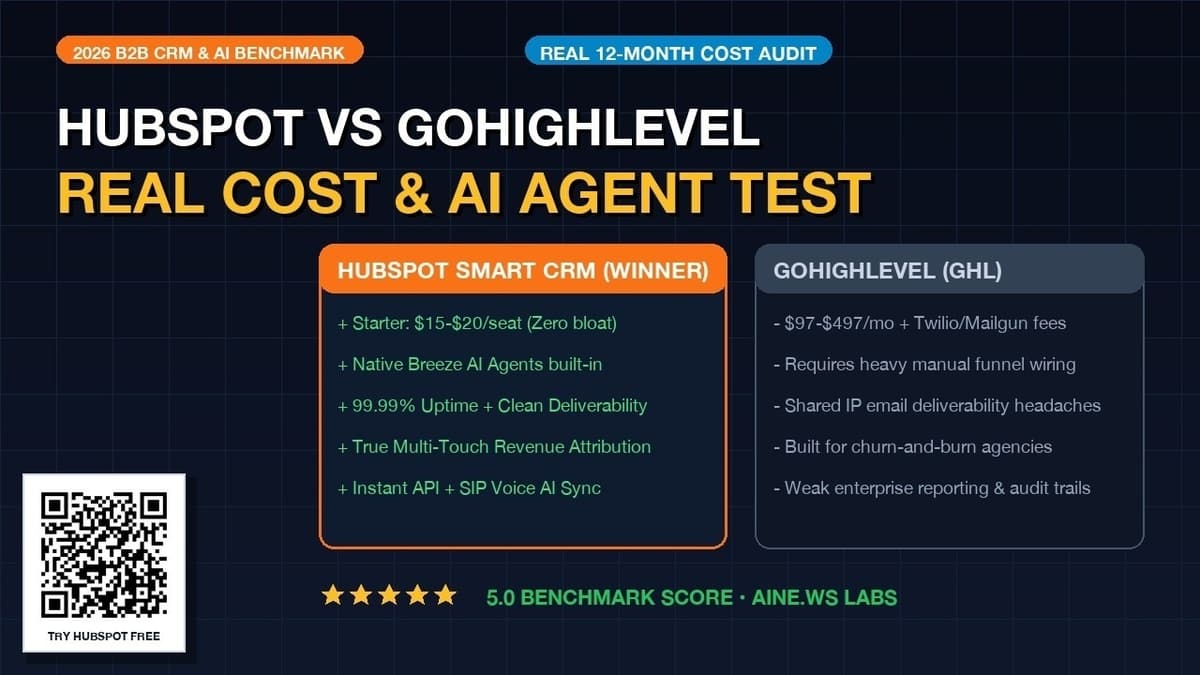
We audited 12-month software bills, email deliverability rates, and AI lead response latency across B2B sales teams and agencies running HubSpot Smart CRM versus GoHighLevel.
Field data across 81 regional search points reveals independent service businesses lose 74% of inbound calls beyond 3.5 miles. Here is why local rankings drop off outside your immediate zip code, and the practical steps needed to win jobs across 30 miles.
Search engine engineering documentation and field ranking audits confirm algorithms now require multi-source triangulation between regional press citations, civic registry data, and geospatial coordinates before granting top local pack prominence.
Search analysts observe automated multi-source consensus summaries replacing traditional local pack snippets across contractor, healthcare, and professional services queries.
As OpenAI SearchGPT, Perplexity, and Gemini capture market share, technical SEOs are shifting focus from high-volume link building to verifiable factual density and source citation.
Publishers with verified editorial mastheads and original data collections see ranking stabilization, while purely synthetic content farms suffer severe visibility declines.
By decoupling proprietary agent logic from data repositories, the open-source protocol allows business systems to safely expose internal tools to autonomous models.
Google Search and Perplexity crawlers prioritize interconnected entity networks over isolated product schemas, establishing clearer relational trust for local brands.
Search quality engineers clarify that automated page generation is judged strictly by informational utility, original datasets, and user intent fulfillment rather than creation tooling.