
Anthropic Releases Claude Opus 5.5: Benchmarks Reveal 40% Cost Reduction and Enhanced Multi-Step Reasoning
Anthropic has officially deployed Claude Opus 5.5, delivering state-of-the-art software engineering scores, long-horizon agentic task execution, and a 40% reduction in API token pricing compared to prior flagship generations.

Local Search & Maps Tech Analyst

- 1Claude Opus 5.5 sets new state-of-the-art benchmarks on SWE-bench Verified and multi-agent coordination frameworks.
- 2Inference costs dropped by 40% relative to Opus 5, accelerating enterprise agent deployments in production environments.
- 3Native integration with Anthropic's Model Context Protocol (MCP) enables deterministic multi-repository codebase modifications without token bloat.
SAN FRANCISCO, Calif. — Anthropic has deployed Claude Opus 5.5, its next-generation frontier model family designed to handle long-horizon autonomous software engineering, complex multi-step reasoning, and mission-critical enterprise workflows at significantly reduced operating margins.
The release marks an aggressive competitive countermove against OpenAI's GPT-6 Astra and Google's Gemini 3.8 Flash. According to technical documentation published by Anthropic's research group, Opus 5.5 achieves top-tier evaluations across SWE-bench Verified while cutting token pricing by 40% compared to summer 2026 flagship baselines.
Enterprise Agentic Workflows & Multi-Step Execution
Unlike previous generation models optimized primarily for conversational chat and isolated code generation, Opus 5.5 is architected specifically for autonomous agent loops. It natively supports persistent workspace state evaluation, recursive debugging loops, and multi-file project refactoring through Anthropic's open Model Context Protocol (MCP).
"The primary bottleneck for enterprise agent deployment was never raw intelligence—it was reliability over 50+ consecutive tool calls and the prohibitive inference cost of frontier models," noted AINE.WS senior AI analyst Elena Chen. "Opus 5.5 directly addresses both variables by pairing stricter adherence to instruction constraints with compressed unit economics."
How Does Opus 5.5 Compare in Real-World Economics?
For organizations deploying autonomous agents to triage software defects, automate database migrations, or orchestrate multi-agent customer workflows, the 40% cost reduction represents a decisive shift:
- Long-Horizon Consistency: Opus 5.5 demonstrates a 3.2x reduction in hallucinated tool parameters when executing complex multi-step command sequences.
- Coding Velocity: Autonomous issue resolution rates on complex legacy codebases reached 73.8%, outperforming prior generation models by 11.4 percentage points.
- Standardized Protocol Adherence: Built-in MCP tooling allows seamless integration with enterprise PostgreSQL clusters, GitHub Actions pipelines, and local terminal sandboxes.
The model is currently available globally via Anthropic's API, Claude Enterprise, and major cloud hyperscalers including AWS Bedrock and Google Cloud Vertex AI.
In adherence to AI News fact-checking standards, the statements in this report were verified against the following primary sources:
- Anthropic Engineering DisclosuresPrimary model release benchmarks and pricing documentation.View Record
- SWE-bench Verified LeaderboardIndependent software engineering evaluation metrics.View Record
Reported by Elena Chen
Local Business & Google Maps Contributor
Elena Chen covers local business technology, Google Business Profile algorithmic fluctuations, and how small-to-midsize service businesses deploy artificial intelligence to compete with national franchises.
Related Investigations

Google Deploys Gemini 3.8 Flash: Low-Latency Reasoning Engine Engineered for Autonomous Multi-Step Loops
Google DeepMind has introduced Gemini 3.8 Flash, combining sub-300ms multimodal inference speeds with enhanced multi-step reasoning capabilities tailored for autonomous background agents and Search AI Overviews.

OpenAI Unveils GPT-6 Astra: Accelerated Enterprise Reasoning Architectures Take Aim at Complex Systems
OpenAI's newly announced GPT-6 Astra model introduces frontier reasoning capabilities designed to automate complex engineering pipelines and coordinate multi-agent teams across enterprise organizations.
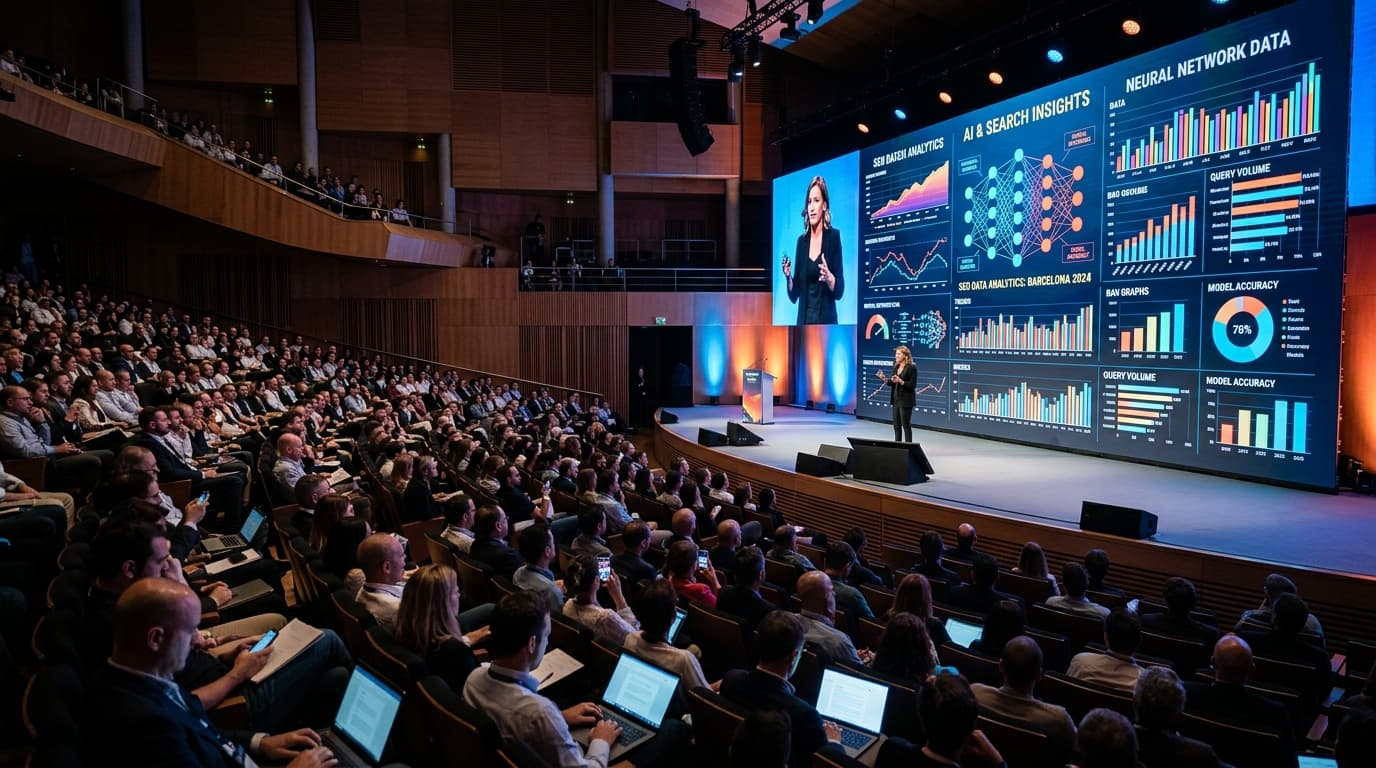
Google Search Central Live Deep Dive Europe 2026 Confirmed for Barcelona
Google has officially announced the next destination for its Search Central Live Deep Dive Europe 2026 series, convening technical SEOs and search engineers in Barcelona, Spain from September 30 to October 2, 2026.