
Google Deploys Gemini 3.8 Flash: Low-Latency Reasoning Engine Engineered for Autonomous Multi-Step Loops
Google DeepMind has introduced Gemini 3.8 Flash, combining sub-300ms multimodal inference speeds with enhanced multi-step reasoning capabilities tailored for autonomous background agents and Search AI Overviews.

Founder & Lead Search Analyst

- 1Gemini 3.8 Flash delivers sub-300ms time-to-first-token while maintaining competitive mathematical and agentic reasoning scores.
- 2Direct integration into Google Search AI Overviews accelerates live multi-source query synthesis across commercial search results.
- 3Engineered specifically for high-throughput autonomous workflows where high API costs previously constrained agent iteration loops.
MOUNTAIN VIEW, Calif. — Google DeepMind has launched Gemini 3.8 Flash, a specialized reasoning model designed to bridge the gap between high-speed conversational response times and frontier multi-step problem solving.
As commercial search engines and enterprise agent architectures require faster processing pipelines, Gemini 3.8 Flash emphasizes low-latency throughput without sacrificing logical coherence. The model processes multimodal inputs—spanning audio, video, code, and structured tabular data—at sub-300 millisecond response latencies.
Impact on Google Search & AI Overviews
The immediate deployment of Gemini 3.8 Flash directly enhances Google's localized AI Overviews and conversational search interfaces. By reducing the inference lag required to synthesize multi-source consensus, Google is actively expanding real-time AI summaries into commercial, local, and technical query verticals.
"Speed is a ranking factor not just for web page load times, but for generative synthesis engines," explained Justin Davis, Editor-in-Chief at AINE.WS. "When Google can run an 8-source verification cycle in 250 milliseconds, dynamic AI Overviews become the default entry point for virtually all commercial search journeys."
Autonomous Developer & Enterprise Applications
In addition to consumer search integration, Gemini 3.8 Flash has been rolled out across Google AI Studio and Vertex AI for developer integration. Early benchmarks indicate strong performance in real-time voice agents, automated customer intake pipelines, and continuous background test suites where heavyweight frontier models proved too slow or expensive for sustained deployment.
In adherence to AI News fact-checking standards, the statements in this report were verified against the following primary sources:
- Google DeepMind ResearchTechnical architectural disclosure and latency benchmarks.View Record
- Google Search Central Developer BlogSearch engine generative overview integration parameters.View Record
Reported by Justin Davis
Publisher & Editor-in-Chief
Justin Davis is the founder and publisher of AI News (aine.ws). He has spent over a decade analyzing programmatic search infrastructure, algorithmic local ranking systems, and autonomous digital business architecture.
Related Investigations

Anthropic Releases Claude Opus 5.5: Benchmarks Reveal 40% Cost Reduction and Enhanced Multi-Step Reasoning
Anthropic has officially deployed Claude Opus 5.5, delivering state-of-the-art software engineering scores, long-horizon agentic task execution, and a 40% reduction in API token pricing compared to prior flagship generations.
OpenAI Unveils GPT-6 Astra: Accelerated Enterprise Reasoning Architectures Take Aim at Complex Systems
OpenAI's newly announced GPT-6 Astra model introduces frontier reasoning capabilities designed to automate complex engineering pipelines and coordinate multi-agent teams across enterprise organizations.
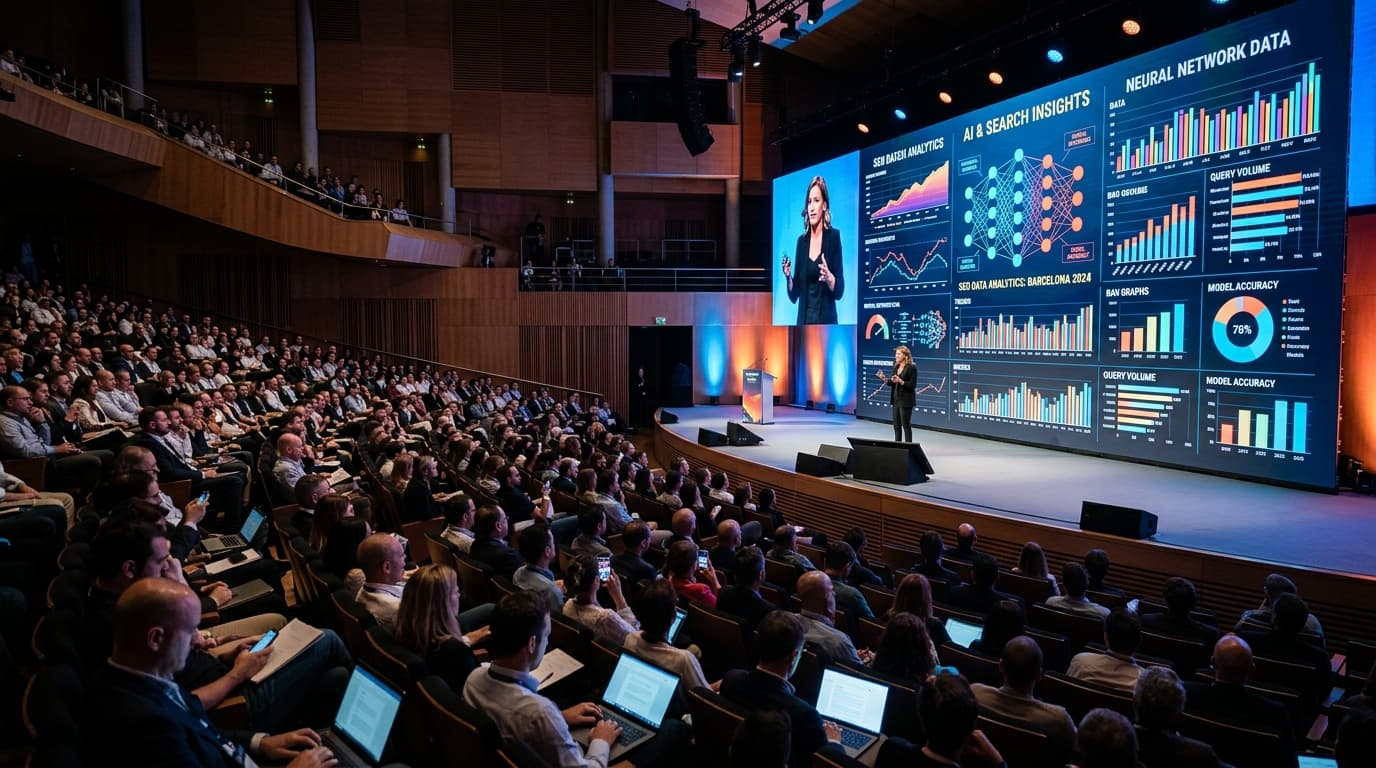
Google Search Central Live Deep Dive Europe 2026 Confirmed for Barcelona
Google has officially announced the next destination for its Search Central Live Deep Dive Europe 2026 series, convening technical SEOs and search engineers in Barcelona, Spain from September 30 to October 2, 2026.